
Losing a leg changes the way a dog moves, but it doesn’t mean a dog has to slow down or stop enjoying life. In fact, one of the things I love most about working with tripod dogs is watching them figure out just how capable they really are.
Dogs are amazing at adapting. Once they have healed from an amputation, they learn to redistribute their weight and figure out how to move on three legs. But just because they can adapt doesn't mean we shouldn't help them build the strength, balance, and confidence they need to do it well. That's where hydrotherapy can be so beneficial.
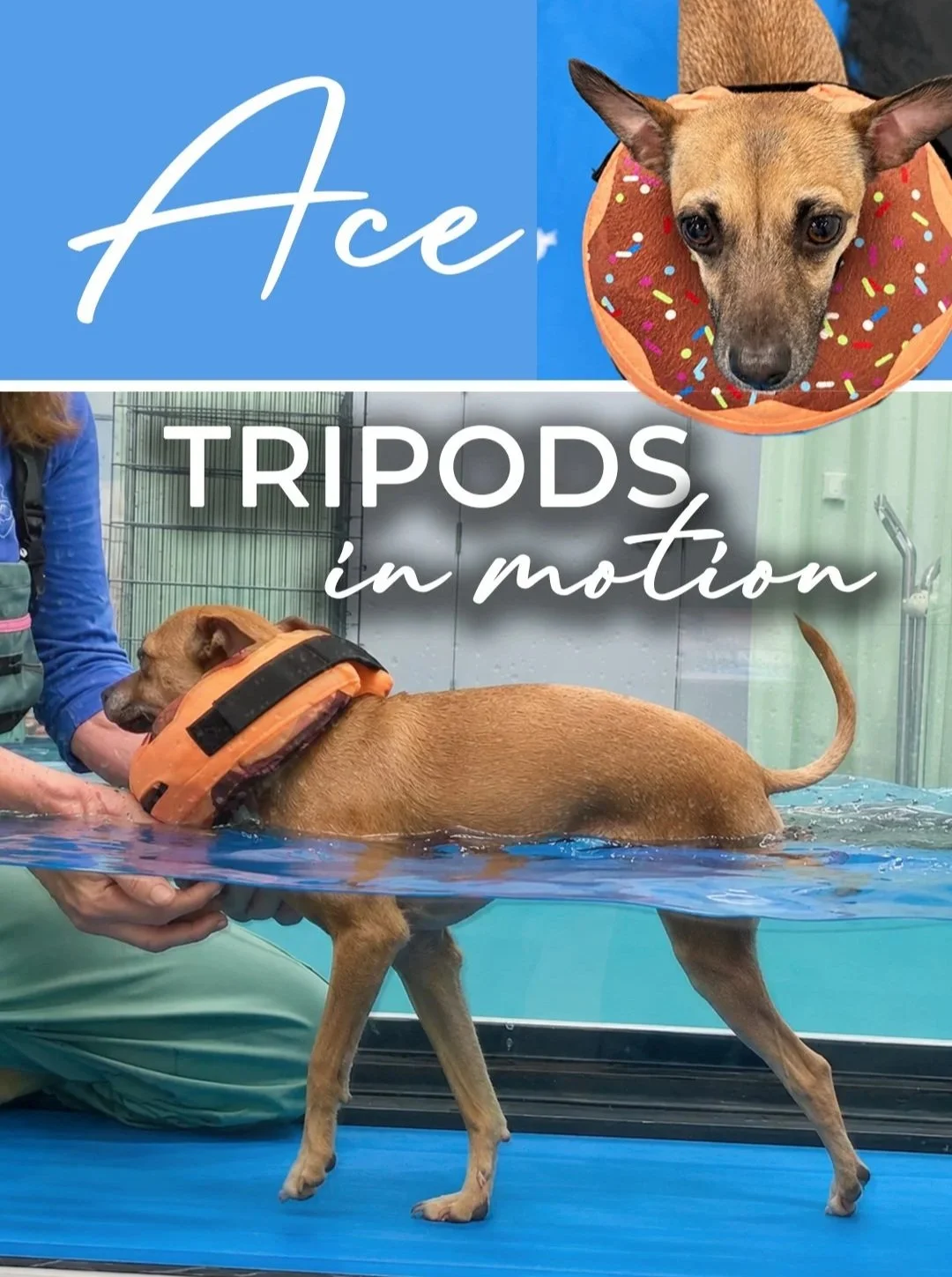
Ace, a @rescuelyfe_ rescue, in his first underwater treadmill session. Click image to watch
For a dog missing a hind leg, that remaining hind leg has a lot more responsibility. It helps with propulsion, balance, and stability that were once shared between two hind legs. Strengthening that leg is important, but I also want to look at the whole body. The core, the spine and the other remaining limbs all have to work together to keep the dog balanced and moving efficiently.
One of my favorite things about the underwater treadmill is that it gives tripod dogs a supportive place to work on all of this.
With the water at approximately chest level, buoyancy takes about 60% of the dog's body weight off their joints and allows them to exercise with less impact than they would experience on land. The water also provides resistance as they walk, which encourages the muscles to work.
It's a great combination: support from the water while still making the muscles work.
And then there's balance. A tripod dog may physically adapt very quickly after an amputation, but confidence can be a different story.
You may notice that your tripod becomes more clingy than they were before their amputation. They can physically figure out how to walk on three legs pretty quickly, but one little incident can shake their confidence. Maybe they turn too quickly, lose their balance, and fall. Suddenly, they're more cautious about making that same movement again.
That's why I don't just want them to get stronger. I want them to feel confident in their body.
During a treadmill session, I'm constantly watching how they are moving and adjusting the session to what they need that day. Sometimes that means slowing things down. Sometimes it means giving them a little more support. And sometimes it means cheering them on like they're competing in the Olympics.
I'm always talking to them, encouraging them, and keeping things positive. And yes, sometimes I sing to them. Whatever works, I want them to finish a session thinking, "I can do this."
A tripod dog's core and spine also deserve attention. When a dog is missing a leg, the body has to make adjustments to maintain balance. Strengthening the core and supporting muscles can help them maintain better stability, posture and body control.
Of course, every tripod is different. Age, size, fitness level, which leg was amputated and how well they have adapted all make a difference. That's why I tailor each hydrotherapy session to the individual dog rather than following the same routine for every tripod.
The goal isn't simply to make a three-legged dog stronger. It's to help them become stronger, more balanced and more confident in the body they have.
And if you've ever watched a happy tripod dog take off running, you already know something pretty special: Three legs can go a LONG way!
I am currently working with three tripod dogs—Gunner, Archie and Ace—who have all graced my social media with their love this year. I'll be sharing more about each of them, along with videos of their hydrotherapy sessions.
For now, click the image above or the button below to see Ace's very first session in the underwater treadmill.